Liquid Boundaries: How a New Generation of Artists Is Dissolving the Walls of the Traditional Gallery
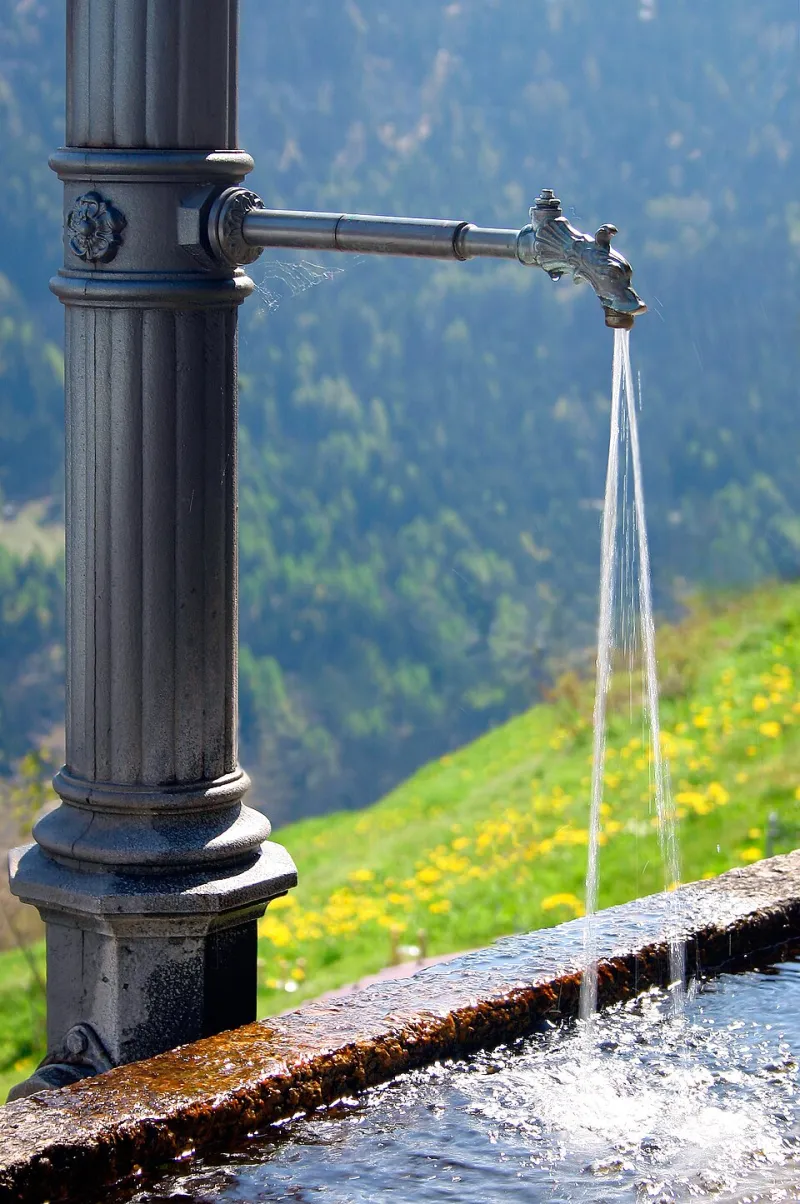
Photo: Juhanson, CC BY-SA 3.0, via Wikimedia Commons
There is a particular kind of unease that settles over a gallery visitor the moment they realize the art around them is changing. Not metaphorically — not in the way all great work shifts meaning over time — but physically, visibly, in real time. A mist drifts across a suspended canvas. A slow drip reshapes a pigment field on the floor below. The piece you observed ten minutes ago no longer exists in quite the same form. Welcome to the expanding world of water-reactive art, where fluid dynamics have become one of contemporary America's most compelling creative forces.
A Movement Born From Restlessness
The impulse to incorporate water into visual art is hardly new. From the ink-wash traditions of East Asian painting to the rain machines of early twentieth-century Dadaist happenings, artists have long been drawn to water's transformative power. What distinguishes the current moment, however, is the sophistication of intent and the breadth of practitioners involved. Emerging artists working from studios in cities like Portland, Chicago, Miami, and Brooklyn are no longer simply gesturing toward the aquatic — they are engineering entire experiential ecosystems around it.
Marcellus Vane, a Brooklyn-based installation artist whose work has been shown at several independent art spaces in the Northeast, describes his practice as "a negotiation between control and surrender." His most discussed piece, Confluence, involved a network of overhead irrigation channels that released mineral-rich water across suspended sheets of Japanese washi paper at irregular intervals throughout a six-week exhibition. No two visitors witnessed the same configuration. "The gallery kept asking me for a certificate of authenticity," Vane recalls with measured amusement. "I told them the certificate was the process itself."
The Technical Frontier
Creating durable, exhibitable work with actual water as a core component presents formidable technical challenges. Traditional archival concerns — humidity, mold, structural integrity — become active design considerations rather than threats to be mitigated. This has driven a wave of material innovation among artists and their collaborators.
Several studios are now working with hydrophobic polymer coatings that allow pigment to bead, flow, and resettle across treated surfaces without permanently bonding. Others have partnered with materials scientists at universities to develop water-soluble pigment compounds that can be replenished cyclically, meaning the artwork effectively regenerates itself between viewings. Resin-casting techniques borrowed from industrial waterproofing have found new life in sculptural contexts, allowing artists to encapsulate flowing water within transparent structural forms that appear simultaneously frozen and kinetic.
Sofia Reinholt, whose studio practice is based in the Pacific Northwest, has spent the better part of three years developing what she terms "tidal substrates" — layered fabric panels treated with reactive mineral compounds that visibly shift color and texture when exposed to controlled misting systems. Her current project, commissioned for a mid-sized museum in Seattle, involves a room-scale installation in which visitors move through a carefully calibrated precipitation field. "The building itself becomes a watershed," she explains. "Every person who walks through changes the flow pattern. The piece is never the same twice, and that's precisely the point."
Redefining Exhibition Logistics
For institutions, embracing water-reactive work requires more than philosophical openness — it demands infrastructural adaptation. Curators and facilities managers at galleries hosting such installations have had to contend with waterproofed flooring, drainage systems, humidity-controlled adjacencies, and liability considerations that simply do not arise with conventional painting or sculpture exhibitions.
The Isabella Stewart Gardner Museum in Boston and the Dia Art Foundation in New York have both, in recent years, hosted temporary water-integrated works that required significant logistical coordination. Smaller independent spaces have often proven more agile, willing to accept the operational complexity in exchange for the distinctive audience engagement these works generate.
Visitor response data gathered informally by several participating venues suggests that water-reactive installations consistently produce longer average dwell times than comparable static exhibitions. Audiences linger. They return for second viewings. They photograph the same piece from the same angle on different days, drawn by the awareness that what they are documenting is, in some essential sense, irretrievable.
Ephemerality as Artistic Argument
Underpinning much of this work is a deliberate philosophical stance regarding permanence and value. In an art market that has historically privileged the durable, the collectible, and the reproducible, water-reactive installations represent a pointed counterargument. The work resists commodification not through abstraction but through its fundamental material condition: it cannot be owned in any conventional sense because it cannot be fully stabilized.
This position resonates with broader currents in the US contemporary art scene, where interest in ephemeral, participatory, and site-specific practices has grown considerably over the past decade. The influence of Land Art pioneers such as Robert Smithson and Ana Mendieta — both of whom engaged deeply with natural processes and material impermanence — is evident in the intellectual lineage many of these younger artists claim. Yet the current generation is also responding to distinctly contemporary pressures: climate anxiety, the destabilization of ecological systems, and a cultural reckoning with humanity's relationship to natural resources.
"Water is not neutral anymore," observes Darius Kimani, a multidisciplinary artist and educator based in Atlanta whose practice incorporates storm runoff collected from urban surfaces. "Every drop carries a history — of where it fell, what it touched, what we've put into it. When I bring that into a gallery, I'm bringing the outside world in. I'm asking people to be uncomfortable with what they've been treating as background."
The Audience as Participant
Perhaps the most significant shift catalyzed by water-reactive art is the reconceptualization of the viewer's role. When a work is actively changing — when a visitor's breath, body heat, or movement through a space subtly alters the behavior of a mist field or a flowing pigment channel — the boundary between observer and collaborator becomes genuinely porous.
This interactivity is not incidental. It is, for many practitioners in this space, the central artistic proposition. The gallery visitor is no longer positioned as a passive recipient of completed meaning but as an agent whose presence is materially registered by the work itself. In this sense, water-reactive art extends and deepens the participatory ethos that has characterized much of the most vital American contemporary practice over the past two decades.
The movement remains, by most measures, at an early stage. Technical standardization is limited, institutional infrastructure is still developing, and critical frameworks adequate to the work's specific challenges are only beginning to emerge. Yet the energy surrounding this practice — in studios, in emerging art spaces, in the conversations happening at residencies and university programs across the country — suggests that water has found its moment as a primary medium of contemporary expression.
The gallery, it seems, will never be quite dry again.