Against the Archive: How Contemporary Water Artists Are Making Impermanence the Point
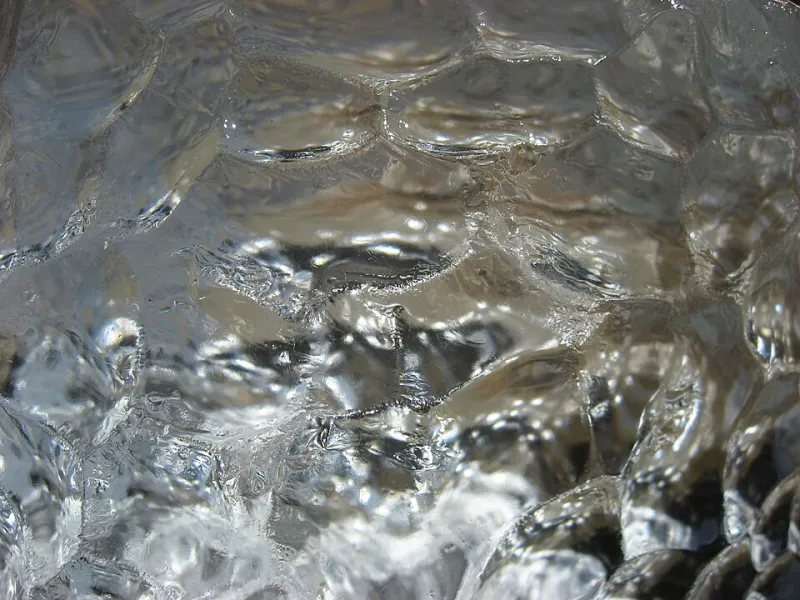
Photo: Kim Hansen, CC BY-SA 3.0, via Wikimedia Commons
There is a particular tension that runs through the contemporary art market: the belief that a work's value is inseparable from its capacity to endure. Collectors acquire. Museums conserve. Institutions insure. The entire apparatus of the art world is constructed around the premise that great art persists. A growing number of water-based artists across the United States are challenging that premise directly—not through provocation for its own sake, but through a deeply considered philosophical commitment to making work that is, by design, destined to disappear.
This is not a new idea in the broadest sense. The Tibetan Buddhist tradition of sand mandalas—elaborately constructed only to be ritually dismantled—has long offered Western audiences a glimpse of art-making uncoupled from permanence. But the current wave of water-focused practitioners is arriving at impermanence through a distinctly contemporary set of concerns: the climate crisis, the commodification of digital culture, and an increasingly urgent reckoning with mortality in an age that has grown unusually reluctant to acknowledge it.
The Medium Is the Message, and the Message Is Dissolution
Consider the ice sculptor who refuses to work indoors. For artists who carve directly into large-format ice blocks and install their pieces in public plazas—from Chicago's Millennium Park in winter to outdoor festivals in the Pacific Northwest—the melt is not a flaw to be managed. It is the culmination of the work. The sculpture's most complete statement is made not at the moment of its unveiling but at the moment of its final puddle.
Similarly, a subset of painters working in what some have begun calling "water-soluble abstraction" apply pigment to surfaces using techniques that guarantee the image will shift, run, or vanish entirely within days of completion. These artists document their process on video but intentionally decline to sell the physical object—because, strictly speaking, the physical object will not survive long enough to be delivered.
What these practitioners share is a refusal to treat the finished, stable artifact as the terminal point of meaning. Instead, they locate meaning in duration, in witness, and in the particular emotional texture of watching something beautiful become something else.
Climate Anxiety and the Art of Letting Go
It would be difficult to discuss this movement without acknowledging the environmental context in which it is flourishing. The American West is experiencing drought conditions of historic severity. Coastal communities from Miami to Seattle are watching familiar shorelines transform. Water—once so abundant as to seem inexhaustible—has become one of the most visible symbols of ecological precarity in the national imagination.
For many water artists, working with impermanent media is inseparable from this reality. To make an ice installation in Phoenix and watch it dissolve under the desert sun is not merely an aesthetic gesture. It is a rehearsal of grief. It is a way of sitting with loss that our culture, by and large, has not developed adequate rituals to process.
Some artists working with projected water imagery—casting moving footage of rivers, tidal pools, and glacial melt onto architectural surfaces—describe their practice as a form of environmental elegy. The projection disappears when the machine is switched off. The river it depicts may be gone within a generation. The work does not pretend otherwise.
Ownership, Authenticity, and the Digital Complication
The rise of NFTs offered the art world a seductive proposition: that digital works, no matter how infinitely reproducible, could be assigned a unique, ownable identity. For a certain kind of artist, this was a solution to a problem. For the water-media practitioners discussed here, it represented precisely the wrong answer to precisely the right question.
If the point of impermanent water art is to resist the logic of ownership and preservation, then minting a token that certifies permanent digital ownership of a dissolving ice sculpture is, in a sense, a philosophical contradiction. Several artists working in this space have spoken publicly about declining NFT opportunities on exactly these grounds—not out of technophobia, but out of a commitment to the work's core argument.
Authenticity, they contend, is not located in the certificate. It is located in the experience of standing before something that will not be there tomorrow. It cannot be screenshotted into permanence. It cannot be insured. It can only be witnessed.
What the Audience Receives
This raises an obvious and important question: what does the viewer take away from an encounter with art that leaves no trace?
Artists and critics who have spent time in this space tend to describe a quality of attention that is qualitatively different from the experience of viewing a painting behind glass. When the audience understands that the work is actively changing—that the ice is melting, that the pigment is running, that the projection will end—they tend to look differently. More carefully. With a heightened awareness of their own presence as witnesses.
There is something here that resonates with the American cultural moment in ways that more permanent media perhaps cannot. A culture saturated with content—with infinite scroll, with streaming libraries that never deplete, with archives that promise to preserve everything forever—may be particularly hungry for experiences that insist on their own finitude.
The Mosaic That Will Not Hold
At Aqua Mosaics, we have always understood water as more than subject matter. It is a way of thinking about form, about time, and about the relationship between the made thing and the world that receives it. The artists working in impermanent water media are, in a sense, taking that understanding to its logical extreme.
They are making mosaics that will not hold. And in doing so, they may be making some of the most honest art of our contemporary moment—work that acknowledges, with clarity and without sentimentality, that nothing stays. Not the glacier. Not the installation. Not, in the end, us.
The question they leave their audiences with is not "How do we preserve this?" but something far more difficult: "What does it mean to have been here at all?"