Beyond the Single Sense: How Water Installations Are Rewiring the Way We Perceive Art
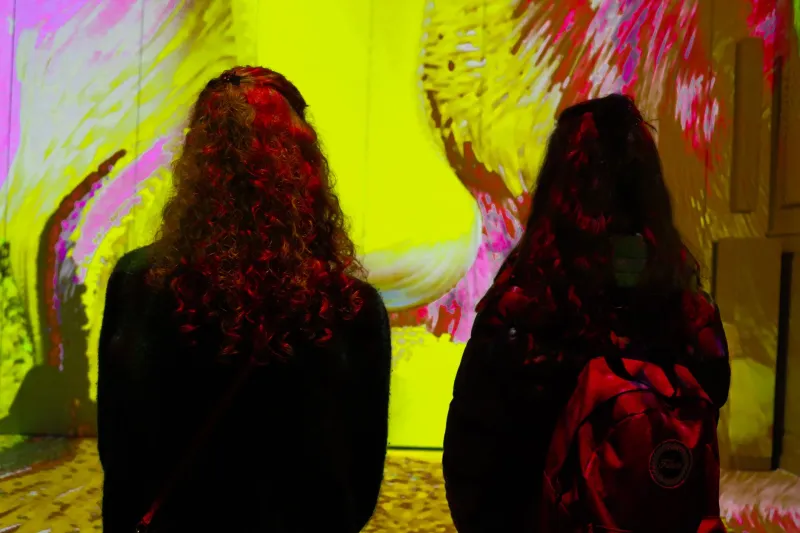
There is a particular kind of disorientation that occurs when you stand inside a well-constructed water installation and realize, with some unease, that you cannot isolate what you are experiencing. The low hum you feel in your sternum — is it sound, or is it the vibration of water moving through a steel channel two feet away? The blue-green shimmer cast across your hands — is it color, or is it temperature made visible? For a growing number of artists working at the intersection of aquatic media and perceptual science, that confusion is not a failure of design. It is the entire point.
Across the United States, an emerging cohort of installation artists is building work that deliberately blurs the sensory registers through which we encounter water. Informed by research into synesthesia — the neurological phenomenon in which stimulation of one sense involuntarily triggers another — these practitioners are constructing environments where sound becomes color, color becomes pressure, and the surface of water serves as a kind of membrane between competing perceptual worlds. The results are arresting, occasionally destabilizing, and increasingly recognized as a significant development within contemporary water art.
What Synesthesia Offers the Artist
Synesthesia affects an estimated four percent of the population in documented forms, though researchers increasingly suggest that milder, more situational forms of cross-sensory blending are far more common. For artists, the phenomenon offers a conceptual framework as much as a physiological one. If the brain is capable of routing sensory information across unexpected channels — if a musical note can genuinely produce an experience of color, or if a texture can evoke a taste — then the gallery becomes a space where those pathways can be deliberately activated, even in visitors who do not identify as synesthetic.
Water, it turns out, is an unusually productive medium for this kind of work. Its acoustic properties are rich and variable: the frequency of a drip against a glass surface differs fundamentally from the white noise of turbulent flow, which differs again from the near-silence of a still pool. Its visual behavior — refraction, reflection, the prismatic scatter of light through moving surfaces — generates color and pattern that shift with every change in ambient light. And its thermal and tactile qualities introduce a physical dimension that most visual art cannot access. An artist working with water is, almost by definition, working across multiple senses simultaneously. The synesthetic turn simply makes that multiplicity intentional and rigorous.
Installations That Demand a New Kind of Attention
Consider the structural logic of installations in which underwater speakers transmit specific audio frequencies through shallow pools, causing the water's surface to organize into geometric interference patterns — forms that shift in real time as the tonal composition evolves. Visitors to such works report hearing the patterns as much as seeing them, describing a sensation in which the visual geometry seems to carry its own pitch. The water is not illustrating the sound; it is translating it into a visual register that the eye interprets as musical.
Other practitioners work in the opposite direction, beginning with color. Certain artists working in this vein construct installations in which the chromatic temperature of projected light — moving from deep violet through amber to white — is synchronized with changes in water flow rate and acoustic output. The result is an environment in which color appears to have weight and velocity, and in which viewers frequently report that specific hues seem louder or quieter than others. These are not metaphors. For many visitors, the perceptual crossings are involuntary and immediate.
What distinguishes the most rigorous work in this space is the precision with which artists calibrate these sensory translations. This is not ambient art designed to soothe. It is an investigation — sometimes an interrogation — of the assumptions we carry into cultural spaces about how knowledge arrives and through which channels it is considered legitimate.
Accessibility as Artistic Argument
The implications of this approach extend well beyond the aesthetic. Several artists working in synesthetic water installation have spoken explicitly about the relationship between their practice and questions of accessibility within the gallery system. For visitors who are deaf or hard of hearing, an installation that renders sound as visible water geometry is not merely an interesting perceptual experiment — it is a fundamentally different kind of invitation. For visitors with visual impairments, work that encodes color as temperature or as auditory frequency opens a channel of engagement that conventionally mounted visual art forecloses entirely.
This is not to suggest that synesthetic water art is primarily therapeutic or accommodating in intent. The artists themselves are largely resistant to that framing, and rightly so. But the movement does carry within it an implicit critique of the ways in which traditional gallery practice has privileged a single, disembodied mode of visual engagement — the detached eye, the contemplative distance, the silence enforced by institutional convention. Water, as these artists deploy it, refuses that detachment. It demands that the body be present, permeable, and attentive on multiple frequencies at once.
The Neuroscience Behind the Work
The dialogue between these artists and the scientific community is active and, in some cases, formally structured. Several practitioners have developed residencies and collaborative research arrangements with university neuroscience departments, particularly in cities like Chicago, Boston, and San Francisco, where arts-science partnerships have gained institutional momentum. These collaborations are producing work that is more precisely calibrated than earlier, more intuitive explorations of cross-sensory experience — and they are also generating empirical data about how gallery visitors actually process multisensory water environments.
Preliminary findings from some of these partnerships suggest that immersive, multisensory water installations produce measurably different patterns of attention and recall than conventional visual art encounters. Visitors spend more time in the space, report higher levels of emotional engagement, and demonstrate stronger memory formation around the experience. Whether those effects are attributable to the water specifically, or to the multisensory design more broadly, remains an open question — and one that the artists themselves are often more comfortable leaving open than the scientists they work alongside.
Water as the Ideal Translator
What continues to draw artists to water as the medium for this kind of perceptual work is its unique capacity to function as a translator between sensory registers without fully belonging to any one of them. It can be seen, heard, felt, and — in certain installations involving humidity, mist, or thermal variation — almost tasted. It responds to sound, generates sound, refracts light, and carries heat. It is, in a sense, already synesthetic by nature.
The artists working in this space are not imposing a foreign concept onto an unwilling material. They are, rather, recognizing and amplifying something that water has always been doing — moving between the senses, resisting categorization, insisting on a kind of total attention that most of our cultural environments are not designed to encourage.
For audiences willing to surrender the habit of looking at art from a careful distance, these installations offer something genuinely rare: the experience of knowing something through your whole body, all at once.