Broken Into Meaning: The Fragmentation Principle Shaping Contemporary Water Installation
There is a particular kind of discomfort that arrives when you realize you are being asked to complete a picture that no single panel will give you. Standing inside a water installation by Chicago-based artist Dara Melling, visitors frequently report the sensation of reaching—intellectually, even physically—toward a coherence that recedes the closer they approach. That effect is entirely deliberate. For Melling and a generation of artists working across the United States, fragmentation is not a compositional accident. It is the argument.
"Water has never been one thing," Melling has said in previous public conversations about her practice. "It is a watershed, a molecule, a political boundary, a memory. The mistake is presenting it as unified when the reality is plural and contested."
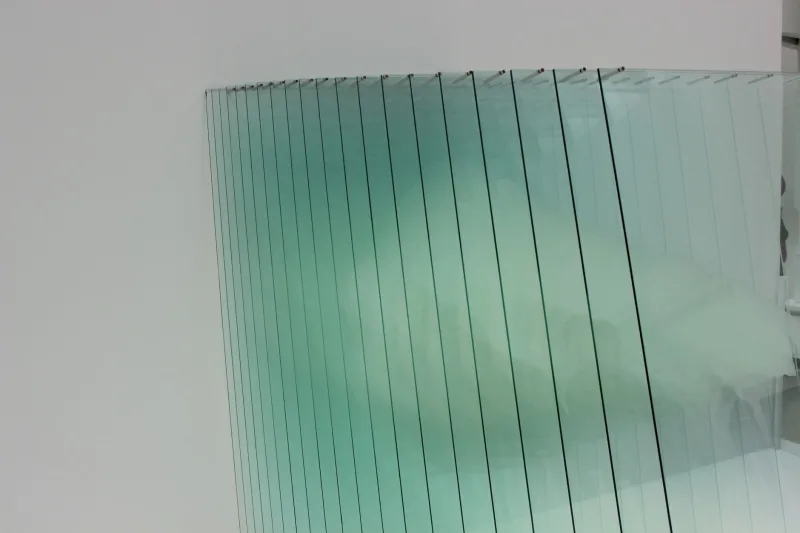
This commitment to multiplicity—expressed through shattered mirror arrays, discontinuous video sequences, architecturally divided gallery spaces, and layered projection—is reshaping how installation art engages with water as both subject and material. And it is doing so at a moment when American audiences are increasingly accustomed to receiving environmental information in fragments: a social media post here, a drought map there, a news segment cut short by the algorithm.
The Formal Logic of the Broken Surface
Fragmentation as an artistic strategy predates digital culture by centuries. Mosaic itself—the ancient practice of assembling meaning from constituent tesserae—understood that proximity of pieces creates the illusion of wholeness while preserving the integrity of each individual element. What contemporary water artists are doing is inverting that dynamic: they present the pieces and withhold the resolution.
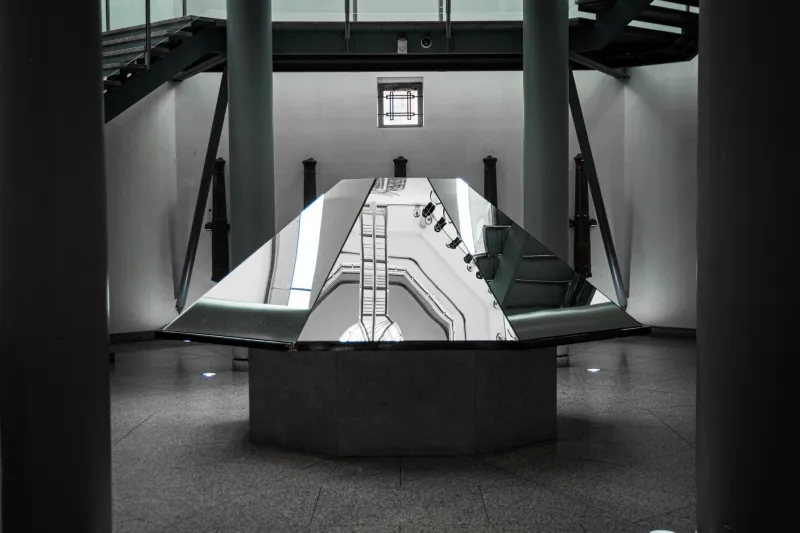
New York-based installation artist Tomás Reyes works almost exclusively with fractured reflective surfaces suspended above shallow water basins. In his 2023 series Dispersal Events, panels of mirror glass were deliberately cracked and rehung at irregular angles above still pools, so that a single overhead light source multiplied into dozens of competing reflections on the water below. No two viewing positions offered the same image. The work demanded lateral movement, patience, and a willingness to accept that no single vantage point was authoritative.
"I am interested in the epistemology of the fragment," Reyes explains. "What does it mean to know something about water through a broken image? I think it means you know it more honestly than if I handed you a clean photograph."
The comparison to photography is instructive. Where documentary water photography has historically sought the decisive, legible image—the cracked riverbed, the submerged home, the child at a contaminated tap—fragmented installation refuses that clarity. It implicates the viewer in the act of interpretation rather than positioning them as passive recipient of a predetermined message.
Discontinuity as Environmental Testimony
For artists working at the intersection of water and ecological crisis, fragmentation carries additional rhetorical weight. The American relationship to water scarcity, contamination, and infrastructural failure is itself deeply discontinuous. Communities in the Mississippi Delta, the Colorado River basin, and post-industrial Midwest cities like Flint, Michigan, have experienced water crises that the broader national conversation has absorbed in pieces—viral moments, congressional hearings, and then silence—without ever assembling into sustained reckoning.
Los Angeles-based collective Watershed Syntax has built much of its practice around this structural discontinuity. Their large-scale video installations use multiple asynchronous loops projected across non-contiguous wall sections, so that water footage from drought-affected California farmland, urban stormwater runoff in Houston, and Great Lakes shoreline erosion plays simultaneously but never synchronizes. Viewers cannot watch everything at once. They must choose, move, abandon one image for another.
"That experience of incompleteness is the content," says collective co-founder Priya Anand. "We are not illustrating fragmentation as a theme. We are producing it as a bodily experience. You leave the room having seen parts of a crisis you could not hold all at once. That is precisely how most Americans live with environmental information."
The formal decision to use asynchronous loops rather than a single edited narrative is significant. Editing implies authorial resolution—someone has decided what belongs together and in what order. The refusal of that resolution is itself a political position.
Assembling the Viewer
Perhaps the most demanding aspect of fragmentation-based water installation is what it requires of the audience. Traditional gallery spectatorship, even in the context of immersive work, tends to position the viewer as someone who moves through a completed object. Fragmented installations actively recruit viewers as co-constructors of meaning.
This is not universally comfortable. Exhibition visitor research consistently shows that audiences accustomed to interpretive wall text and guided narratives can experience anxiety when faced with work that withholds synthesis. Several of the artists interviewed for this piece noted that the discomfort itself is part of the intended experience.
"I want people to feel the effort of assembling," says Melling. "Because that effort—that slight frustration of reaching for coherence—is what it actually feels like to try to understand what is happening to water in this country. It is not a clean story. The form should reflect that."
Reyes takes a somewhat different view, emphasizing not frustration but invitation. "The fragmented image is generous in a way the unified image is not. It leaves room. It says: your reading is part of this work. You are not a spectator of a finished thing. You are a participant in its completion."
The Mosaic Principle, Reconsidered
It is worth returning to the mosaic as a conceptual anchor. The ancient form understood that meaning could be constructed from discontinuous units—that the grout line between tesserae was not a failure of wholeness but a condition of it. Each piece retained its individual color and shape; the image emerged from their collective arrangement without erasing the constituents.
Contemporary water installation artists working in the fragmentation tradition are extending this logic into three-dimensional space, time, and viewer movement. The "tesserae" in their work may be mirror shards, video clips, spatial divisions, or even the gaps between projected images. The grout lines are the silences, the asynchronous pauses, the angles of reflection that yield nothing legible.
What assembles—when it does—is not a unified image of water but something more provisional: a sense of water as contested, multiple, and irreducible to any single narrative. In an era when the environmental stakes attached to water have never been higher, and when the public's capacity to hold complex, ongoing crises in sustained attention has never been more compromised, that provisionality may be the most rigorous form of truth-telling available to visual art.
The fragment, it turns out, is not a lesser version of the whole. It is a different kind of wholeness—one assembled in real time, by a viewer who cannot remain passive, in front of a subject that refuses to hold still.