When the Marsh Becomes the Medium: Artists Who Let Ecosystems Lead the Work
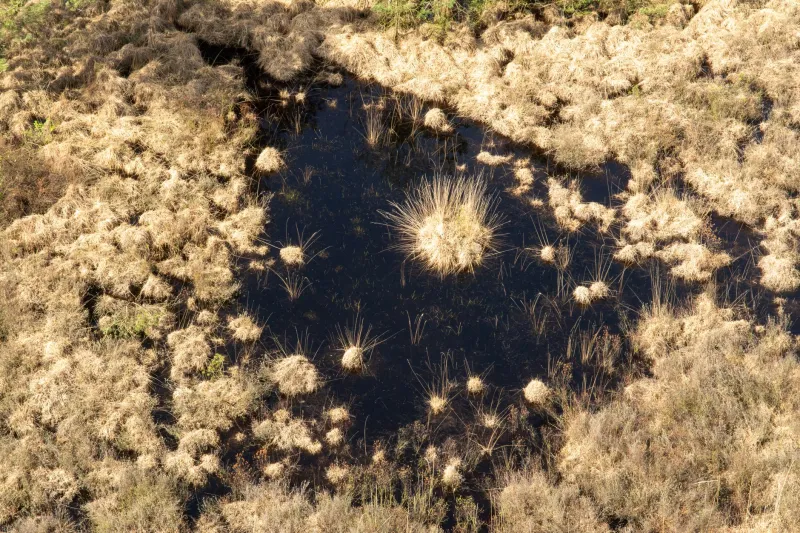
There is a particular kind of patience required to collaborate with a marsh. It does not respond to deadlines. It does not care for gallery hours. It operates on tidal rhythms, seasonal floods, and the slow, centuries-long logic of sediment accumulation. And yet, a growing number of contemporary American artists are choosing exactly this partner—one that cannot speak, cannot sign a contract, but whose feedback is unmistakable. When the cattails return, when the herons land, when the water clears: that is the work succeeding.
This emerging field—sometimes called ecological art, sometimes restorative land practice, sometimes simply wetland collaboration—sits at a genuinely unusual intersection. It asks artists to subordinate their aesthetic instincts to biological necessity, and it asks scientists to accept that beauty, narrative, and public engagement are not frivolous additions to conservation work but may, in fact, be essential to its longevity.
Restoration as Composition
In the Louisiana coastal parishes, where wetland loss has long outpaced national headlines, artist and environmental designer Monique Verdin has spent years working alongside Houma Nation community members to document, grieve, and actively reconstruct the bayou landscapes that industrial canal dredging has systematically dismantled. Her installations—woven structures of native marsh grass, tidal-flow markers rendered in hand-dyed fabric, sound recordings of water moving through restored channels—are not decorative gestures placed atop restoration sites. They are the restoration sites. The aesthetic choices are inseparable from the hydrological ones.
Verdin's approach reflects a broader principle that defines this movement: the artwork cannot be extracted from the ecological function without destroying both. Remove the woven grass structures and you lose the sediment-catching infrastructure. Remove the sediment-catching infrastructure and the visual language of the piece collapses. The two logics are load-bearing for each other.
This is a fundamentally different proposition from environmental art that depicts ecological crisis, or even from land art that occupies a natural site. Here, the site is not a backdrop. It is a collaborator with agency, with needs, with a measurable response to every decision the artist makes.
The Hydrologist in the Room
What distinguishes these projects from well-intentioned but ultimately decorative gestures is the depth of the scientific partnership. In the Great Lakes region, interdisciplinary collectives have begun embedding hydrologists and wetland ecologists into the earliest stages of project development—not as consultants brought in to approve a finished concept, but as co-designers whose technical requirements shape the visual vocabulary of the work from the outset.
One such collaboration, developed along a degraded shoreline in northern Michigan, centered on the reintroduction of native sedge meadows as both ecological buffer and visual field. The artists involved worked directly from hydrological mapping data to determine the placement of hand-built earthworks—low berms of reclaimed clay that redirect stormwater runoff back into the meadow rather than allowing it to sheet across impervious surfaces into the lake. The forms they chose were not arbitrary. The curves were dictated by watershed geometry. The scale was determined by soil permeability studies. And yet the resulting landscape reads, to a visitor walking its paths, as unmistakably composed—a series of spatial relationships that feel both inevitable and intentional.
This is precisely the effect these artists are pursuing. The work should feel like it belongs so completely to its site that the question of whether it was designed becomes genuinely difficult to answer.
Indigenous Knowledge as Structural Element
Perhaps the most significant—and most carefully navigated—dimension of this movement is its engagement with Indigenous ecological knowledge. Across the country, from the tidal marshes of the Pacific Northwest to the prairie potholes of the Dakotas, artists are seeking out partnerships with tribal nations whose land stewardship practices encode centuries of hydrological understanding that Western science is only beginning to formally recognize.
These collaborations carry real ethical weight, and the most thoughtful practitioners are explicit about the asymmetries involved. The artist arrives with a platform, with access to grant funding, with connections to museum audiences. The Indigenous community arrives with knowledge, with relationship to the land, and with a history of having that knowledge extracted without reciprocity. Navigating this honestly requires more than a co-credit line.
In the Pacific Northwest, several projects have formalized these partnerships through tribal-led governance structures in which the Indigenous community retains final decision-making authority over both the ecological interventions and the public presentation of the work. The artist's role becomes something closer to translator—rendering traditional water management practices legible to a contemporary art audience without flattening or appropriating their meaning.
The results, when handled with integrity, can be genuinely transformative. Camas meadows restored through controlled burning and traditional water diversion practices become sites of public gathering. Visitors encounter not just a beautiful landscape but a living argument about whose knowledge systems we choose to trust with our most pressing ecological problems.
Measuring Success in Nonhuman Terms
One of the more provocative aspects of this work is the way it redefines artistic success. The conventional metrics—critical reception, institutional acquisition, audience numbers—are not irrelevant, but they are secondary. The primary measure is biological.
Did the macroinvertebrate population recover? Did the native plant species reestablish at the projected rate? Did the water clarity index improve over the three-year monitoring period? These are not questions that most artists are trained to ask about their work, and answering them requires a relationship with time that the art world's exhibition cycles do not naturally support.
Several of the most ambitious projects in this space have built decade-long monitoring commitments into their foundational structure, partnering with university ecology departments to track biological indicators over time frames that extend well beyond any single artist's career phase. The work, in this sense, outlives the artist's active involvement—it continues to develop, to succeed or fail, to respond to climate pressures and policy changes in ways that no single human author controls.
This is, depending on your perspective, either the ultimate relinquishment of artistic ego or its most radical expression.
Art That Cannot Be Collected
There is an obvious tension between this model and the commercial structures that sustain most contemporary art practices. A restored wetland cannot be acquired by a collector. A tidal-flow installation that requires annual ecological maintenance does not fit neatly into a museum's conservation budget. Funding tends to come from environmental grants, public land agencies, and philanthropic foundations rather than the traditional art market—which means the practitioners of this work exist in a genuinely hybrid professional space, accountable to both aesthetic and scientific communities in ways that can be simultaneously liberating and precarious.
And yet the appetite for this kind of work appears to be growing. As climate anxiety deepens and the inadequacy of purely symbolic environmental gestures becomes harder to ignore, the proposition of art that actually does something—that leaves the land measurably better than it found it—carries a moral weight that resonates with audiences across the usual cultural divides.
Water, in this context, is not a metaphor. It is the medium, the measure, and the judge. When it returns to a place it had been forced to abandon, the work is complete. When it stays, the work is successful. And when it brings life back with it—the insects, the birds, the native plants, the human communities who depend on all of the above—the installation has achieved something that no gallery wall can contain.
That, perhaps, is the point.