Sealed and Seen: The Artists Turning Gallery Tanks Into Testimonies of Human Consequence
There is something deeply unsettling about watching a plastic bag drift slowly through illuminated water inside a pristine gallery. It moves with the same languid grace as a jellyfish. It catches the light in ways that feel, for a fraction of a second, genuinely beautiful — before recognition arrives, and with it, something closer to shame. That collision of aesthetic pleasure and moral discomfort is precisely the territory that a new generation of water-based installation artists has chosen to occupy.
Across the United States, from converted warehouse spaces in Detroit to white-cube galleries in Los Angeles, artists are constructing what some critics have begun calling "Anthropocene aquariums" — sealed, transparent environments filled with water and populated not by living creatures, but by the residue of contemporary industrial life. Cigarette filters suspended in saline columns. Microplastic constellations frozen in resin-thickened pools. Engine oil dispersed in slow, iridescent blooms across the surface of gallery-spanning tanks. The effect is simultaneously museological and accusatory.
The Logic of the Tank
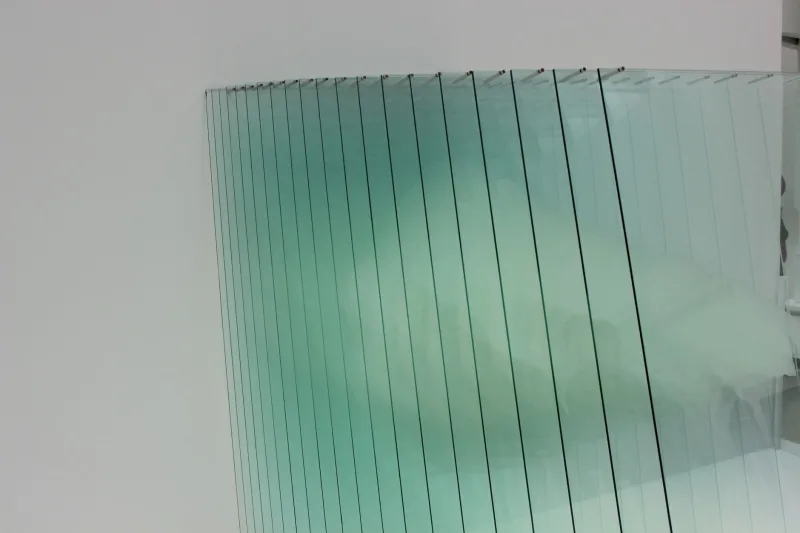
The aquarium, as a cultural form, has always carried a particular kind of authority. It frames its contents as specimens worthy of study — isolated, observable, significant. When artists appropriate that logic and fill the tank not with marine life but with the byproducts of human consumption, the interpretive inversion is immediate and pointed. The viewer, accustomed to peering into glass enclosures from a position of curious remove, suddenly finds the dynamic reversed. The specimen, in some sense, is the act of looking itself.
Philadelphia-based artist Renata Voss, whose recent installation Discharge drew sustained attention at a mid-sized nonprofit gallery in the Fishtown neighborhood, describes her use of large-format acrylic tanks as a deliberate choice rooted in accountability. "I wanted the containment to feel institutional," she explains. "When something is behind glass and lit from below, we assign it value. We decide it matters. I'm asking people to extend that same regard to what we've been discarding into waterways for decades."
Discharge featured six floor-to-ceiling tanks, each filled with water sourced from a different Pennsylvania river system. Suspended within each column were objects recovered from those same waterways during organized cleanup efforts: fishing line, foam packaging, a child's sneaker, a crushed aluminum can still bearing its brand insignia. The sourcing was documented on adjacent wall panels with the precision of an archaeological record.
Visibility as Verdict
What distinguishes this movement from earlier traditions of ecological art is its insistence on a specific kind of visibility — not the panoramic, landscape-scale visibility of, say, earthworks or aerial photography, but the close, pressured visibility of the specimen jar. These works do not allow the viewer to aestheticize distance. The refuse is right there, suspended at eye level, rendered in high definition by water and light.
Chicago artist Marcus Delray has pushed this logic further in his ongoing series Contained Systems, which stages domestic water environments — sinks, bathtubs, fish tanks — inside gallery settings, each filled with water to which trace quantities of agricultural runoff chemicals have been added. The water remains visually clear. Nothing is obviously wrong. And yet the chemical composition, displayed in clinical typeface on mounted placards beside each vessel, describes conditions hostile to aquatic life. The gap between appearance and reality is the work's central argument.
"We've built an entire cultural infrastructure around the idea that clean-looking water is safe water," Delray notes. "These installations are about the failure of the visible. But they're also about the failure of our willingness to look past appearances when looking is inconvenient."
The Gallery as Ecosystem
Several practitioners in this emerging field have begun treating the gallery space itself not merely as a neutral container for their work, but as an active participant in the installation's meaning. The HVAC systems, the humidity, the temperature fluctuations that institutions struggle to control — all of these become variables in what some artists describe as "gallery ecology."
San Francisco-based collective Water Table has produced a series of installations in which sealed tanks are left deliberately unregulated, their internal conditions shifting over the course of an exhibition's run. Algae colonizes glass surfaces. Sediment settles and resettles. Objects corrode at varying rates depending on the chemical composition of the water used. Visitors who attend an opening and return three weeks later encounter a materially different work. The transformation is not incidental — it is the piece.
"We're interested in the gallery as a site where time becomes visible," says collective member Priya Anand. "Museums and galleries spend enormous resources fighting entropy. We're inviting it in. The changes that happen inside the tank over six weeks are a compressed version of what's happening to actual aquatic systems over decades. The gallery becomes an accelerated model."
Complicity and the Act of Observation
Perhaps the most philosophically ambitious aspect of this body of work is its sustained interrogation of the viewer's position. Traditional environmental art frequently positions its audience as sympathetic observers of harm — people who care, who are moved, who leave the gallery with a renewed sense of urgency. These installations are less generous. They implicate.
This implication operates through the specific mechanics of the aquarium format. The act of pressing close to a tank, of leaning in to examine what floats within it, mirrors the posture of fascination and detachment that, many of these artists argue, has characterized the broader cultural response to ecological crisis. We observe. We find it interesting. We move on.
Voss is direct about this dimension of her practice. "I want people to catch themselves enjoying the light through the water before they register what's in it. That moment of aesthetic pleasure followed by recognition — that sequence is the work. It's not about guilt, exactly. It's about the gap between how we're trained to look and what we're actually seeing."
A Medium for This Moment
The aquarium installation, as a form, is particularly well suited to the present cultural moment in the United States, where debates about water quality, access, and contamination have moved from environmental policy margins to mainstream political discourse. From the ongoing legacy of Flint, Michigan's water crisis to contested pipeline routes crossing Indigenous territories, water has become a site of concentrated national reckoning.
These artists are not illustrating those debates so much as finding formal equivalents for them — ways of staging the conditions of the argument rather than representing its conclusions. The sealed tank, with its promise of containment and its inevitable suggestion of pressure, offers a structural metaphor that feels genuinely adequate to the complexity of the moment.
What remains to be seen is whether the form can sustain its critical charge as it gains institutional recognition. Aquariums, after all, are popular. They attract families and school groups. They generate merchandise. The challenge for artists working in this mode will be to maintain the productive discomfort that gives the work its force — to ensure that the gallery tank remains a site of reckoning rather than simply another immersive spectacle.
For now, at least, the best of this work holds that tension with considerable skill. The water is lit. The refuse floats. And the viewer, leaning close to the glass, begins to understand that the specimen and the observer are not entirely distinct.