Eyepiece as Protest: How Citizen Artists Are Using Microscopy to Reclaim the Narrative of Water Quality
For most of American history, the authority to declare a waterway safe or compromised has rested with government agencies, university laboratories, and credentialed researchers operating behind institutional walls. The data they produce flows upward into reports, regulatory filings, and policy decisions — rarely downward into the communities whose drinking water, fishing grounds, and childhood swimming holes are at stake. A quiet but consequential movement is disrupting that arrangement, and it is arriving not from the academy but from kitchen tables, backyard sheds, and community workshops equipped with affordable microscopes and an appetite for visual truth.
This is the world of the amateur water microscopist — part artist, part documentarian, part agitator — and their numbers are growing in ways that are beginning to register within contemporary art circles.
The Democratization of the Invisible
The barrier to entry for basic microscopy has fallen dramatically over the past decade. Entry-level compound microscopes capable of resolving individual bacteria and protozoans are now available for well under two hundred dollars. Smartphone adapters allow practitioners to photograph what they see through the eyepiece with remarkable clarity. Open-source identification guides, shared across platforms like iNaturalist and dedicated Discord servers, have made it possible for a motivated amateur in rural Louisiana or suburban Detroit to name the organisms swimming in a sample pulled from a drainage ditch behind their neighborhood.
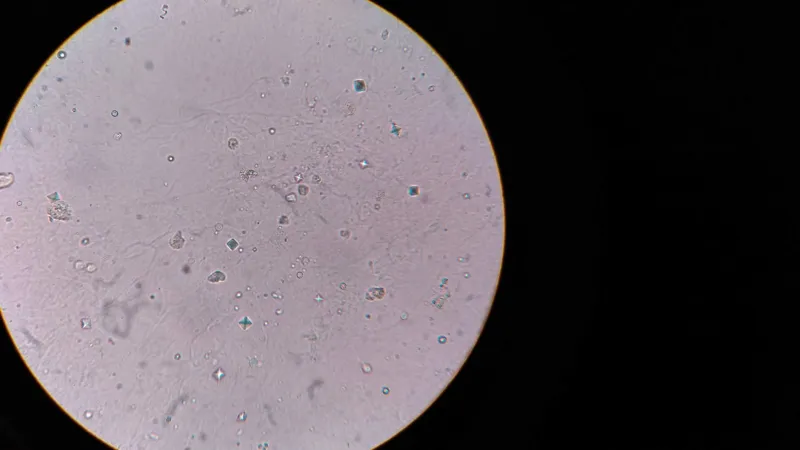
What artists have recognized — and what distinguishes their practice from pure hobbyist science — is that these magnified images carry an aesthetic charge that raw data tables do not. A single frame capturing a bloom of Euglena against a pale amber background, or the crystalline geometry of a diatom colony suspended in sample water from a Midwestern agricultural runoff site, communicates something that an EPA monitoring report cannot. It makes the invisible visible, and in doing so, it makes the abstract urgently immediate.
Resistance Through Resolution
The political dimension of this practice is neither incidental nor subtle. Many of the artists engaged in water microscopy work are operating in communities where institutional environmental monitoring has been inadequate, delayed, or politically compromised. The legacy of Flint, Michigan — where official reassurances about water safety persisted long after residents understood something was gravely wrong — looms over this movement as both cautionary tale and founding myth.
In that context, the act of collecting a water sample, preparing a slide, and producing a high-resolution image of what lives within it becomes a form of counter-documentation. It is a community asserting its own capacity to see, to record, and to testify. The image is not merely art; it is evidence produced outside the chain of institutional custody.
Artist collectives in cities including Chicago, Houston, and Baltimore have begun organizing what they call "water witness" sessions — structured gatherings where participants learn basic slide preparation techniques, document samples from local waterways, and contribute their images to shared digital archives. These archives are simultaneously artistic portfolios and community-maintained environmental records.
The Aesthetic Language of Microbial Life
Beyond their documentary function, the images produced by this movement possess a visual sophistication that has attracted serious curatorial attention. The world beneath the microscope is, by any measure, a world of extraordinary formal beauty. Ciliates trace spiraling paths through illuminated water columns. Algal filaments arrange themselves into structures of near-mathematical regularity. Pollution indicators — certain species of bacteria, flagellates associated with organic contamination — appear as vivid, almost jewel-like forms against prepared backgrounds.
Some practitioners have developed highly refined photographic techniques, using polarized light microscopy to produce images that read as abstract compositions of saturated color and geometric precision. Others lean into the documentary aesthetic deliberately, presenting their work in clinical formats — grid arrangements, labeled specimens, systematic progressions — that mimic the visual language of scientific publication while existing firmly within the tradition of conceptual art.
The tension between beauty and alarm is, for many of these artists, the entire point. An image that is stunning to behold and simultaneously a record of ecological degradation forces the viewer into an uncomfortable position. The work refuses to let aesthetics serve as anesthesia.
Tools of the Trade
For those drawn to this practice, the entry points are more accessible than they may initially appear. Community biology laboratories, sometimes affiliated with makerspaces or public libraries, offer microscope access and basic training. Organizations such as the Community Science Institute and various regional water-monitoring networks provide protocols for sample collection that ensure images can carry evidentiary weight alongside their artistic value.
Several artist-educators have published detailed DIY guides covering everything from proper water sampling technique to basic staining methods that enhance contrast and reveal structural detail invisible in unstained preparations. These guides circulate freely within the community, reflecting a deliberate ethic of open access that runs counter to the proprietary knowledge structures of formal science.
Digital tools have further expanded the practice's reach. Image-stitching software allows practitioners to composite multiple microscope frames into large-format prints suitable for gallery display. Affordable spectrophotometers, when paired with photographic documentation, allow amateur practitioners to generate quantitative data that supplements their visual records.
Between the Gallery and the Watershed
The question of where this work belongs — in the art world, the environmental movement, or some territory that neither has yet fully named — remains productively unresolved. Several regional galleries have mounted exhibitions featuring water microscopy imagery, presenting the work within contemporary art frameworks without diminishing its documentary claims. Environmental organizations have used the same images in advocacy campaigns, where their visual power amplifies messages that statistics alone cannot carry.
What the movement insists upon, in either context, is the legitimacy of observation conducted outside institutional structures. The community member who prepares a slide from water sampled at the edge of their property is not performing a lesser version of the scientist's work. They are performing a different kind of work — one whose value lies precisely in its situatedness, its proximity to consequence, and its refusal to defer.
In a cultural moment when trust in official environmental data is contested across the political spectrum, that refusal carries a weight that no credentialed laboratory report can quite replicate. The eyepiece, it turns out, is a remarkably effective instrument of dissent.