Ruin as Record: The Artists Who Let Floodwater Write the Final Draft
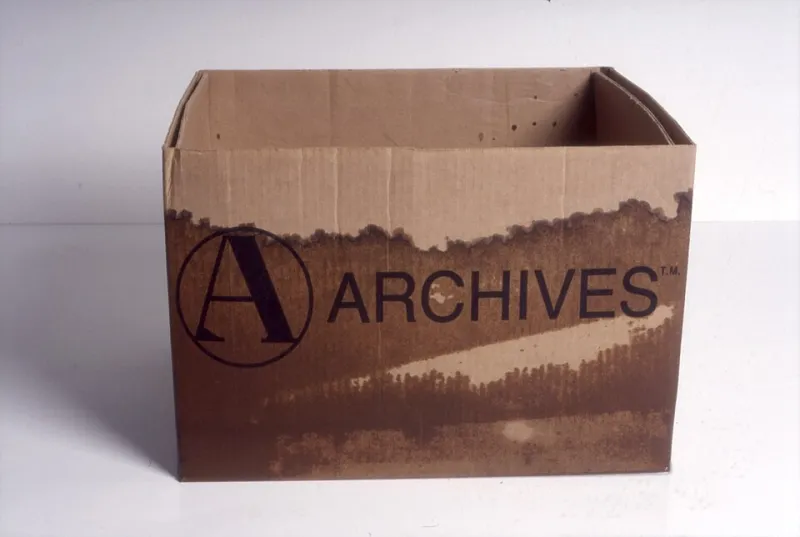
Photo: Heritage Preservation Department - MNHS, CC BY-SA 4.0, via Wikimedia Commons
There is a particular quality to a photograph that has been submerged. The emulsion lifts. Colors bleed into one another with a slowness that mimics geological time compressed into days. Faces dissolve at the edges. What remains is not quite the original image and not quite its absence — it occupies a threshold that no intentional mark-making can easily replicate. A growing cohort of American artists has recognized this threshold as a studio in its own right, one powered not by electricity or intention but by water, time, and the irreversible chemistry of loss.
This movement — if it can be called that — sits at the intersection of ecological grief, archival practice, and material experimentation. Its practitioners are not documenting climate change from a comfortable critical distance. They are immersing their source materials directly into the crisis, then presenting the aftermath as primary evidence.
When Destruction Becomes the Process
The conceptual shift required to see water damage as a medium rather than a misfortune is not a small one. Western art traditions have long treated the preservation of materials as a moral obligation — archivists wear gloves, conservators work under controlled humidity, museums maintain precise atmospheric conditions. To deliberately expose photographs or documents to flooding, to invite mold and tide lines and warping into the work, is to consciously invert that hierarchy.
Yet the inversion carries its own logic. If the subject is irreversible loss — of coastlines, of ecosystems, of the communities that inhabited them — then a pristine, stable artwork may be the least truthful vehicle available. A canvas that has been saturated by actual floodwater from a Louisiana bayou carries a specificity of witness that no painted approximation can claim. The damage is the documentation.
Several artists working in the Gulf Coast region have built sustained practices around this premise. Some collect personal photographs from communities displaced by successive hurricane seasons, then re-submerge them in water drawn from the same flood zones before presenting the degraded prints in large-scale installations. The images retain just enough legibility to identify what they once depicted — a child's birthday party, a backyard garden, a living room — while the water's intervention renders them visibly wounded. Viewers are not looking at records of loss. They are looking at loss itself, fixed in a state of ongoing becoming.
The Archive That Refuses to Hold
The tension between archival impulse and material impermanence runs through much of this work. Archives exist to resist time, to hold experience stable against the erosion of memory. What these artists are constructing are anti-archives — collections that foreground their own inability to preserve, that make the act of losing legible rather than concealed.
In the Midwest, where flooding along the Missouri and Mississippi river systems has displaced agricultural communities with increasing frequency, some artists are working directly with water-damaged farm records: ledgers, land deeds, seed catalogs, and correspondence. These documents carry the economic and emotional weight of generations. When flood-saturated and allowed to dry in contorted forms, they become sculptural objects that communicate something ledgers were never designed to communicate — the sensation of a way of life becoming unreadable.
The choice of found, community-sourced material is significant. It refuses the fiction that climate grief belongs only to the artist. By incorporating the damaged belongings of actual affected families, these works insist on a collective subject. The piece is not about the artist's feelings regarding ecological crisis. It is about what the water took from specific people in specific places, and it asks viewers to hold that specificity rather than retreat into abstraction.
Humidity, Mold, and the Aesthetics of Slow Catastrophe
Not all water damage announces itself dramatically. Some of the most formally compelling work in this space engages with the slower, quieter deterioration caused by chronic humidity — the kind that creeps through buildings in coastal cities, that darkens the corners of rooms, that leaves tide lines on walls after minor flooding events that never make the news.
Artists working with this register tend toward subtler palettes and more intimate scales. Tide lines left by brackish water on paper carry a delicate, almost watercolor quality that belies their origin in structural damage. Mold blooms across photographic surfaces in patterns that can read as painterly gesture — until the viewer understands what generated them. There is a genuine formal beauty at work, and that beauty is itself part of the argument. Climate loss is not always apocalyptic in its visual register. Much of it is quiet, incremental, and easily aestheticized, which is precisely what makes it so difficult to mobilize political attention around it.
By presenting the aesthetics of slow deterioration honestly — neither sanitizing them nor rendering them grotesque — these artists force a reckoning with the seductive quality of ruin. The work is beautiful. The beauty is a problem. Holding both of those facts simultaneously is the experience the art is designed to produce.
The Ethics of Presenting Other People's Losses
Any honest engagement with this body of work must address the ethical complexity it navigates. Using the damaged belongings of flood survivors as artistic material raises real questions about consent, exploitation, and the difference between bearing witness and aestheticizing suffering. The most rigorous practitioners in this space are acutely aware of this tension and address it through process as much as through product.
Many work in close collaboration with the communities whose materials they incorporate, treating the resulting work as co-authored rather than appropriated. Some donate proceeds to climate resilience organizations operating in the source communities. Others present the work in those communities first, before any gallery context, ensuring that the people most directly implicated have the first opportunity to see themselves reflected — or dissolved — in the finished pieces.
These are not solutions so much as ongoing negotiations, and the best of these artists present the negotiation itself as part of the work's meaning. The question of who has the right to frame loss, and in whose interest that framing operates, is not resolved by the art. It is made more pressingly visible by it.
Water as Final Editor
What unites these diverse practices is a willingness to cede the final creative decision to water itself. The artist selects the materials, determines the exposure, chooses the duration — but water determines the outcome. It is a collaboration with a force that does not negotiate, does not revise, and does not preserve. It simply acts, and what it leaves behind is a record of its acting.
In this sense, the work participates in a broader inquiry that Aqua Mosaics has tracked across contemporary practice: the recognition that water is not a passive subject for artistic attention but an active agent with its own expressive authority. To submit materials to flood or saturation is to acknowledge that authority. To exhibit the results is to argue that water's editorial decisions carry as much weight as any human hand.
The archive is drowning. Some artists believe the most honest thing they can do is show us exactly how.