Felt, Not Framed: How Water Artists Are Building Installations You Experience With Your Whole Body
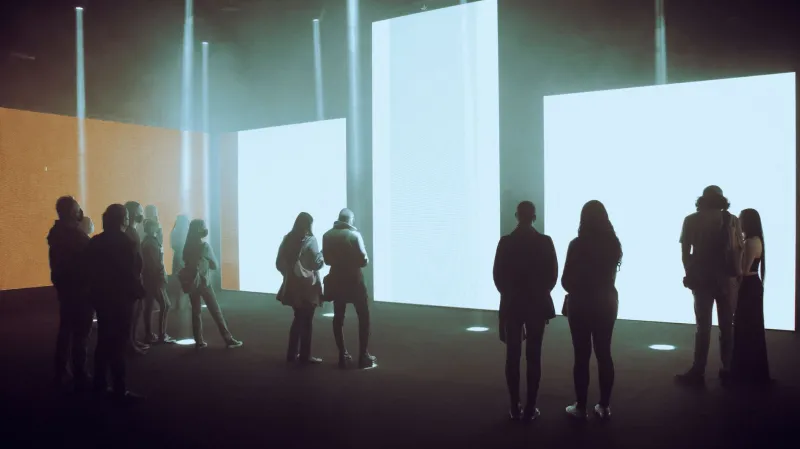
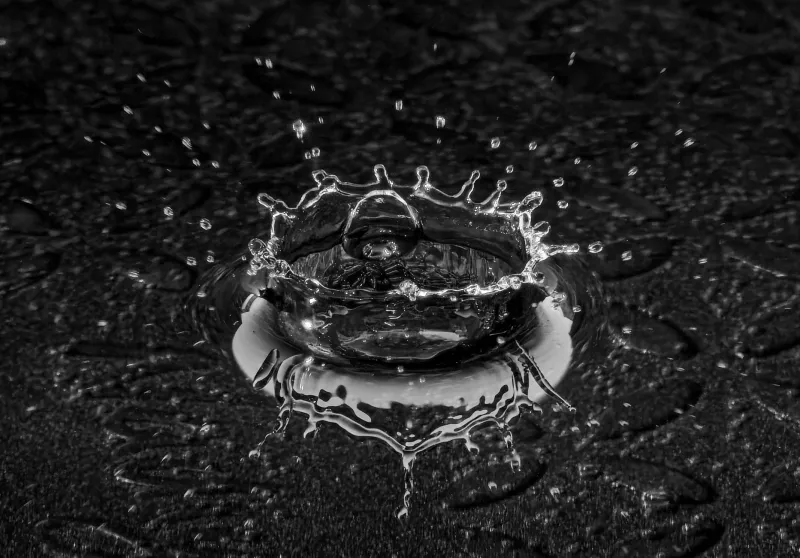
For most of its institutional history, the American gallery has been a place of looking. Visitors move through white rooms, maintaining respectful distances from objects, guided by the implicit social contract that art is a visual exchange — something you receive through the eyes and process through the mind. Water, in this context, has typically been confined to the two-dimensional: photographs of rivers, paintings of coastlines, video projections of waves crashing on screens.
That arrangement is being actively dismantled.
A cohort of contemporary water artists working across the United States is building installations that refuse the primacy of sight. Their work demands that visitors press palms against misted surfaces, walk through curtains of pressurized vapor, feel the temperature differential between two bodies of water held centimeters apart, or stand inside chambers where condensation forms on the skin. The eye is not irrelevant in these spaces — but it is no longer sovereign.
The Limits of Looking
The critique driving this movement is not new, but it has gained particular urgency in a cultural moment saturated with screens. When virtually all visual art can be approximated by a photograph posted to a social media feed, artists working with water have begun to ask a pointed question: what can a digital image never replicate?
The answer, increasingly, is sensation. The slight chill of water vapor meeting a warm forearm. The hydraulic resistance of walking against a gentle current. The way a temperature gradient can make an invisible boundary between two water masses feel as solid as a wall. These experiences exist in a register that no screen can reach, and water — with its extraordinary capacity to conduct heat, carry pressure, and change state across a narrow temperature range — turns out to be an ideal medium for artists intent on working in that register.
Artists such as those associated with immersive installation practices in cities like Chicago, San Francisco, and New York have begun incorporating industrial misting systems, geothermal water loops, and precision-controlled pressure chambers into gallery presentations. The results are environments where visitors' bodies become the primary instruments of perception.
Pressure as Vocabulary
One of the more technically demanding approaches in this emerging field involves the use of water pressure as a compositional element. Rather than spraying mist uniformly, certain installations calibrate nozzle arrays to create zones of varying atmospheric density — areas where the air feels heavier, where breathing shifts slightly, where the skin registers something between humidity and direct contact.
This requires a level of engineering collaboration that traditional studio practice rarely demands. Artists in this space frequently work alongside hydraulic engineers and environmental control specialists, treating the technical infrastructure not as a support system but as a co-author of the work. The result is installations that behave more like weather systems than sculptures — dynamic, responsive to the movement of bodies within them, and impossible to experience the same way twice.
The compositional logic here borrows from music as much as from visual art. Pressure zones function like dynamics in a score: loud and soft, dense and sparse, building toward moments of intensity and releasing into calm. Visitors who move slowly through these spaces report experiences that accumulate over time, the way a long piece of music reveals itself differently in its final movements than its first.
Thermal Variation and the Architecture of Temperature
Water's thermal properties offer a second, equally rich vocabulary. At room temperature, water feels neutral against skin. Cooled by a few degrees, it registers as startling. Warmed slightly, it becomes intimate. Artists working with thermal variation exploit this narrow but emotionally charged range to create spatial experiences that are effectively invisible — you cannot see the temperature gradient between two adjacent water installations, but you can feel it with precision.
Several practitioners have developed what might be called thermal mapping: the deliberate arrangement of water-based elements at different temperatures to create a navigable emotional landscape within a gallery space. Moving from a cool mist chamber into a zone of warmer vapor is not merely a physical transition — it carries associative weight, evoking the shift from open water to a sheltered inlet, from winter to early spring, from exposure to enclosure.
For audiences accustomed to reading art visually, this kind of work can require a period of recalibration. Gallery visitors often report feeling initially uncertain — unsure what they are supposed to be doing, where they are supposed to stand, whether they are experiencing the work correctly. That disorientation, most artists in this field suggest, is precisely the point. It signals the dissolution of the passive observer role and the emergence of something more participatory and more physically present.
Accessibility as Artistic Intention
Perhaps the most consequential dimension of this shift is its relationship to accessibility. The visual-first gallery model has always privileged sighted visitors, treating blind and low-vision audiences as peripheral rather than central to the experience of art. Haptic water installations do not merely accommodate these audiences — they are, in many cases, structured around them.
Artists working in this space have begun collaborating directly with blind and low-vision communities during the development of their installations, treating these collaborators not as consultants but as primary respondents whose feedback shapes the work at a fundamental level. The questions this collaboration surfaces — How does this pressure feel? Does this temperature sequence communicate something? Is this mist dense enough to read as a boundary or does it feel more like open space? — are not accessibility audits. They are compositional inquiries.
The result is work that tends to be richer and more spatially coherent for all visitors. When an installation is designed to communicate through touch and temperature with the same intentionality that a painting communicates through color and line, sighted visitors find that their visual experience of the space is enhanced rather than diminished. The haptic and the visual reinforce each other, creating a density of meaning that neither dimension could achieve alone.
Water as the Medium That Touches Back
What distinguishes water from most other artistic materials is its willingness — if that word can be permitted — to make contact. Stone, canvas, and steel remain at a remove. Water moves toward you. It settles on skin. It transmits temperature instantly. It responds to the heat of a hand held near its surface. In this sense, water has always been the medium most suited to haptic practice; it simply took contemporary artists long enough to recognize and fully exploit that quality.
The installations emerging from this recognition represent something genuinely new in American gallery culture. They are not interactive in the gamified sense that the word has sometimes come to imply — they do not reward button-pressing or invite selfie-taking. They are, rather, environments that ask visitors to slow down, to attend to their own physical responses, and to recognize sensation itself as a form of understanding.
In a cultural landscape where art is increasingly consumed at speed and at distance, that invitation carries weight. Water, felt rather than merely seen, turns out to be a remarkably effective argument for presence.