Pieces of a Larger Problem: How Water Artists Are Using Mosaic Logic to Map Systemic Crisis
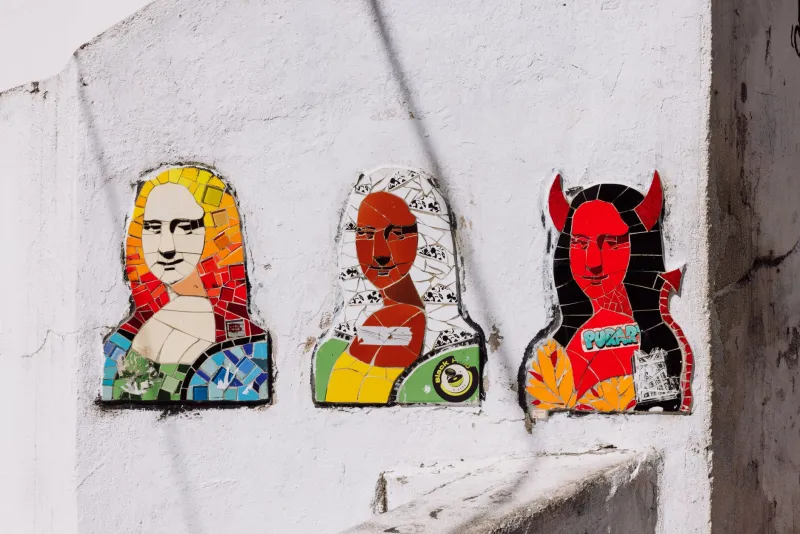
There is an old argument in visual art about proximity and meaning. Stand too close to a mosaic and you see only tesserae—individual chips of glass, stone, or ceramic, each inert and incomplete. Step back, and the image assembles itself with startling coherence. Contemporary water artists have seized on this perceptual dynamic not merely as a compositional strategy but as a political one. For a growing number of practitioners working across the United States, the act of breaking a complex environmental or social reality into discrete visual units—and then asking audiences to reassemble those units into understanding—has become one of the most urgent rhetorical tools available.
This is not the fragmentation of collage for collage's sake. It is fragmentation with a thesis.
The Unit as Argument
The logic begins with a fundamental premise: systemic problems resist singular images. A contaminated aquifer, a redlined neighborhood denied clean municipal water, a delta ecosystem silently collapsing under agricultural runoff—none of these realities can be rendered in a single frame without catastrophic reduction. The mosaic principle offers an alternative. By assembling many small, precisely chosen elements, artists can hold complexity without flattening it.
Consider how several artists working in ceramic tile and resin have begun mapping water-quality data onto physical grid structures—each tile representing a single municipal reporting period, its glaze color calibrated to contamination levels measured in parts per billion. Individually, a tile tells you almost nothing. Arranged across a twelve-foot wall, the chromatic drift from pale blue to deep amber becomes a timeline of institutional neglect that no bar graph could replicate emotionally. The viewer does not merely read the data; they inhabit it.
What distinguishes this approach from data visualization is the insistence on materiality. The tiles have weight. They are fired, cracked in places, occasionally irregular. The imperfection is deliberate—a counter-argument to the false precision of official water-quality reports, which present contamination as a managed, bounded problem rather than an ongoing, textured crisis.
Infrastructure Inequality and the Fractured Grid
Some of the most formally rigorous applications of mosaic logic in contemporary water art address infrastructure inequality directly. Artists in cities like Detroit, Flint, and Baltimore—places where the gap between water access and water safety has been most visibly documented—have developed installation practices that use fragmentation to mirror the fractured character of the systems they critique.
One recurring methodology involves the collection of pipe fragments, meter housings, and valve components salvaged from neighborhoods undergoing infrastructure replacement. These objects are then cleaned, catalogued, and mounted in grid formations that correspond to the geographic layout of the neighborhoods from which they were drawn. The resulting works function simultaneously as maps, as inventories, and as elegies. Each fragment is a unit of evidence. Together, they constitute an argument about which communities receive new infrastructure and which are left to manage with what remains.
The grid is doing significant work in these pieces. Unlike the organic, flowing forms that water art has historically favored—the cascade, the ripple, the wave—the grid implies bureaucratic order. It suggests that the fragmentation on display is not natural but administered. The mosaic principle, in this context, becomes a way of making visible the organizational logic that distributes harm unevenly.
Ecological Collapse, Rendered in Pieces
Beyond infrastructure, mosaic-logic installations have proven particularly effective at representing ecological collapse—a phenomenon that resists dramatic single images precisely because it is gradual, diffuse, and geographically vast.
Artists working with wetland ecosystems along the Gulf Coast and the Great Lakes have developed practices that involve collecting and preserving small biological specimens—seed pods, insect casings, fragments of aquatic vegetation—and embedding them within transparent resin panels arranged in large-scale grid formations. Each panel documents a specific location at a specific moment. The installation as a whole maps change across time and geography in a way that is simultaneously scientific and deeply affective.
What the mosaic format accomplishes here that a documentary photograph cannot is the communication of scale without abstraction. A viewer standing before three hundred resin panels, each containing the remnants of a wetland microhabitat, understands viscerally that the crisis being represented is not a single event but a distributed condition. The sheer accumulation of panels—their repetition, their subtle variations, their occasional absences where a panel has been left deliberately blank to indicate a site where collection was no longer possible—produces a form of comprehension that statistics rarely achieve.
The Rhetoric of Assembly
Critical to the mosaic principle as a rhetorical device is the role it assigns to the viewer. Unlike installations that present a complete, pre-interpreted image, mosaic-logic works require active assembly. The viewer must move—physically and cognitively—between the detail and the whole, between the fragment and the system it represents. This movement is not incidental. It is the argument.
By making viewers participants in the act of synthesis, these artists implicate them in the process of understanding. You cannot remain passive before a work that requires you to step back before it becomes legible. And in that stepping back—in that shift from the particular tile to the panoramic image—something changes in the viewer's relationship to the problem being represented. The systemic becomes comprehensible not because it has been simplified but because it has been made navigable.
This is a significant distinction. Much environmental art of the past several decades has relied on overwhelming scale or visceral imagery to produce a sense of urgency. The mosaic principle proposes a different affective register: not overwhelm but orientation. Not helplessness but the beginning of a map.
Fragmentation as Formal Honesty
There is also, running through these works, a commitment to formal honesty that deserves acknowledgment. Water systems are not monolithic. They are composed of countless discrete components—pipes, aquifers, treatment facilities, regulatory bodies, historical decisions, economic pressures—each of which contributes to outcomes that no single actor fully controls or fully understands. A fragmented compositional strategy does not merely represent this complexity; it mirrors it structurally.
When a water artist chooses the mosaic principle, they are making a claim about the nature of the problem itself. They are saying: this cannot be shown whole because it does not exist whole. It exists in pieces, and to understand it, you must learn to read pieces.
For audiences accustomed to seeking the single clarifying image—the photograph that defines a crisis, the map that explains a disaster—this is a demanding ask. But it is also, these artists argue, the most accurate one available. Water justice, infrastructure inequality, and ecological collapse are not problems with clean edges. They are mosaics of cause and consequence, assembled over decades, visible only to those willing to stand at the right distance.
The artists working in this mode are, in a sense, teaching that distance. One fragment at a time.