When the Water Turns: How Climate Dread Is Rewriting the Visual Grammar of Contemporary Water Art
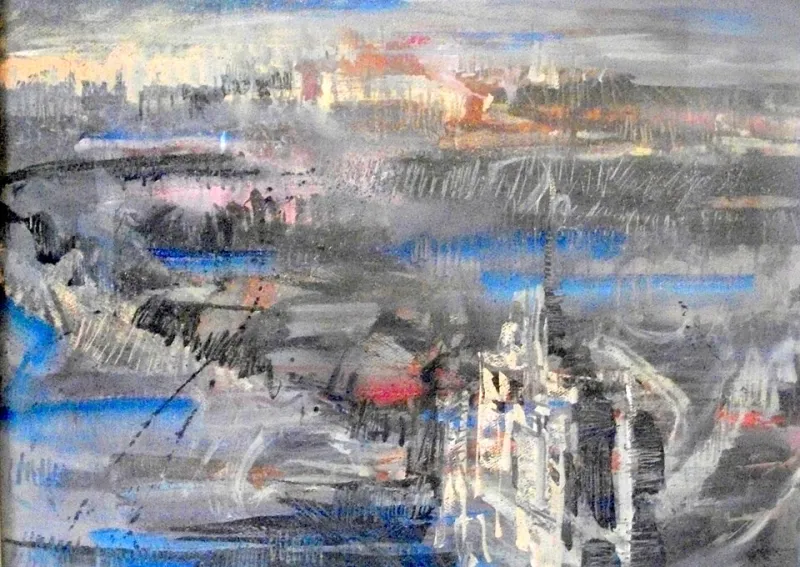
Photo: Jay Meuser, CC BY-SA 3.0, via Wikimedia Commons
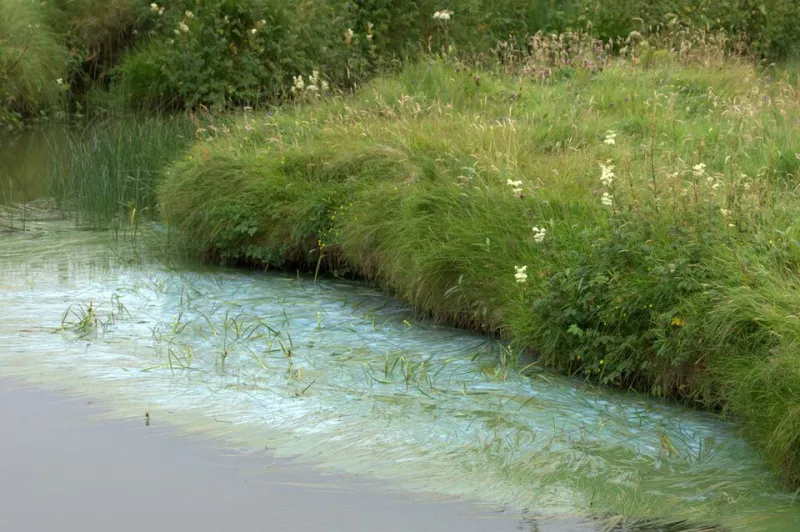
There is a particular quality of light that appears in certain water paintings being made right now — a sallow, greenish cast that sits beneath the surface like something submerged and unresolved. It is not the light of crisis posters or environmental campaigns. It does not ask you to sign anything. It simply unsettles, the way a recurring dream unsettles: not through explicit imagery but through atmosphere, through the sense that the familiar has quietly become wrong.
This shift in register — from documentation to dread, from argument to sensation — is one of the defining movements in contemporary water art in the United States. Across studios from the Pacific Northwest to the Gulf Coast, artists working with water as both subject and medium are reaching past political critique toward something harder to name and, in many ways, harder to escape.
The Exhaustion of the Manifesto
For much of the past two decades, environmentally engaged water art operated within a relatively coherent framework. Artists mapped disappearing glaciers, visualized rising sea levels, and staged interventions at polluted shorelines. The work was urgent, often beautiful, and explicitly legible. Viewers understood what they were meant to feel and why.
That clarity is fracturing. "There's a kind of activist fatigue that has seeped into the studio," says painter and installation artist Miriam Okafor, whose work has been exhibited at venues across the Northeast. "Not a retreat from caring — the opposite, actually. It's more like the dread has become so ambient, so total, that making a pointed argument about it feels almost beside the point. The water isn't just a subject anymore. It's a psychological condition."
Okafor's recent large-format canvases — some exceeding twelve feet in width — depict bodies of water rendered in color palettes that drift just beyond naturalism. Cerulean gives way to a bruised violet; the horizon line dissolves into gradients that suggest neither dawn nor dusk but something in between, a temporal suspension that refuses resolution. Scale, she explains, is deliberate. "When a painting is larger than your body, you stop looking at it and start being inside it. That's where I want the anxiety to live — not as an idea you observe, but as a physical condition you inhabit."
Color as Psychological Instrument
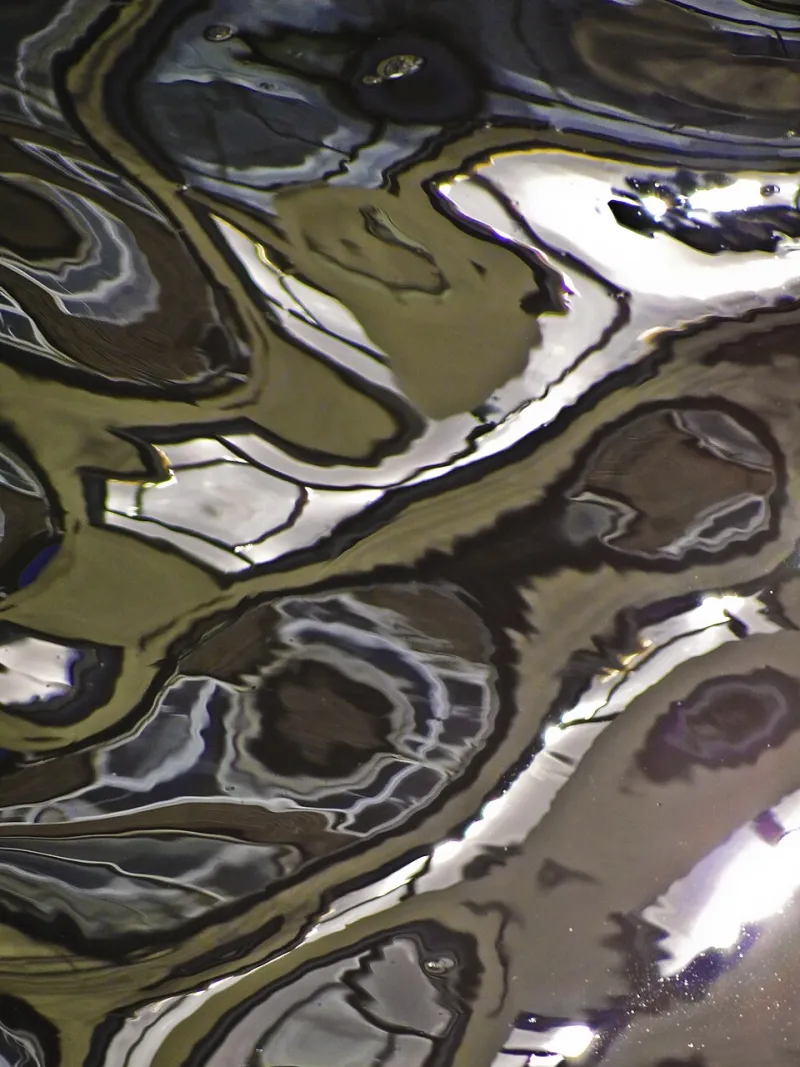
The color choices emerging across this loose movement are among its most formally interesting features. Where earlier eco-art often leaned on the visual rhetoric of catastrophe — blood reds, scorched blacks, the lurid orange of wildfire skies — the new water art tends toward subtler dissonances. Palettes are frequently desaturated in ways that feel less like abstraction and more like illness: the faded quality of something that has been bleached or drained.
Chicago-based artist Dario Espinoza works primarily in encaustic and resin, building up translucent layers that trap pigment in states of partial suspension. His series Subsurface Conditions, shown earlier this year at a gallery in Wicker Park, uses layers of wax infused with iron oxide and diluted indigo to create the impression of water that is simultaneously clear and contaminated — a visual paradox that resists easy categorization. "I'm interested in the moment before the alarm," Espinoza says. "When you can see that something is wrong but you haven't named it yet. That's where most of us actually live with climate change. Not in the disaster, but in the prolonged, low-grade wrongness."
Color theorists have long understood that certain hue combinations trigger visceral unease — the sickly yellows of jaundice, the grey-greens of stagnation. Espinoza and artists like him are mining this territory with considerable sophistication, deploying chromatic instability not as decoration but as a primary carrier of meaning.
Material Degradation as Formal Strategy
Perhaps the most structurally radical tendency in this emerging body of work is the deliberate use of materials designed to deteriorate. Where traditional fine art practice has always prioritized archival permanence, several water artists are now making impermanence not merely a conceptual gesture but a material fact — one that changes the work over its lifespan in ways that parallel ecological degradation itself.
Brooklyn-based sculptor Tess Nakamura builds site-responsive installations using salt-encrusted fabrics, water-soluble inks, and organic matter drawn from local waterways. Her piece Tidal Memory, installed last spring in a former warehouse space in Red Hook, featured suspended panels of treated linen that absorbed humidity from the surrounding air, causing pigment to migrate, bloom, and eventually fade over the course of the exhibition's six-week run. Visitors who attended the opening experienced a fundamentally different work than those who came in the final days.
"The degradation isn't a metaphor I'm explaining," Nakamura says. "It's happening in real time, in front of you. You're watching something lose itself. That's not an argument about climate change — it's the experience of it, compressed into a gallery visit."
The formal implications of this approach are significant. It decouples the artwork from the stable, reproducible object and insists on duration, on presence, on the irreversibility of change. It also produces a particular kind of viewer anxiety — the awareness that what you are seeing cannot be fully recovered or replicated.
Scale, Immersion, and the Undoing of Distance
Across these varied practices, scale functions as a recurring formal lever. Monumental works deny the viewer the comfort of aesthetic distance, the reassuring position of the observer who remains separate from the observed. When a painted seascape stretches across an entire wall and curves slightly at its edges, the perceptual experience tilts toward submersion rather than contemplation.
This is not accidental. The artists working in this mode are acutely aware of the psychological difference between looking at water and being enveloped by it. Immersive installations that use projection, sound, and physical water further collapse the boundary between artwork and environment. Several emerging collectives in cities like Portland, Seattle, and Miami are building room-scale environments in which visitors move through spaces where water — actual or simulated — occupies the floor, the ceiling, or both.
The goal, consistently, is to make intellectual distance impossible. Climate anxiety, these artists argue, has always been most potently felt not as an abstract future threat but as a present, bodily sensation. The formal strategies they are developing are designed to induce exactly that sensation — not to terrify, but to make the dread already present in the culture unavoidable and, paradoxically, shareable.
The Question of Resolution
What these works conspicuously do not offer is resolution. There are no calls to action embedded in Nakamura's dissolving panels, no policy prescriptions lurking beneath Espinoza's layered wax. This is, for some critics, a point of contention. Others read it as the work's most honest quality.
"I think we've reached a moment where the artwork that insists on hope, that wraps the horror in a redemptive frame, can actually function as a kind of anesthetic," says Okafor. "I'm not interested in making people feel better. I'm interested in making them feel accurately. And accurate right now, when it comes to water, involves a lot of uncertainty and grief."
The visual language being assembled by this generation — chromatic unease, material entropy, disorienting scale, the refusal of clean resolution — is not easy to inhabit. That, perhaps, is precisely the point. Water has always been the element that resists containment. In the hands of these artists, it has also become the medium through which a culture's unprocessed anxiety finds form: not argued, not illustrated, but felt, in the body, before the mind has had a chance to look away.